

Quick Answer
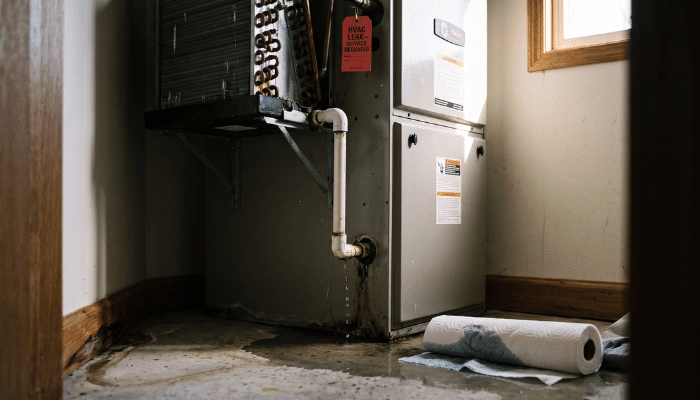
An indoor HVAC unit leaks water when its condensation drainage system fails — most often a clogged condensate drain line, a frozen evaporator coil melting all at once, a rusted or cracked drain pan, a failed condensate pump, or a unit that has shifted off level. Your AC pulls gallons of moisture out of the air on a humid Alabama day, and that water is meant to exit through a drain line; when it can't, it backs up and overflows into your home. Identifying which of these five causes is behind the leak early is what keeps a minor drip from becoming drywall or flooring damage.
Water pooling around or dripping from an indoor HVAC unit is one of the most common service issues homeowners face. While air conditioning is inherently a dehumidification process that generates significant moisture, that water is designed to exit the home safely through a dedicated drainage system. When water escapes the unit, it usually points to a breakdown in the drainage pathway or a mechanical issue affecting airflow. This guide details the primary causes of indoor HVAC leaks and how to identify them before they cause structural damage.
During the hot, humid summer months, an air conditioning system does double duty: it cools the air, and it acts as a giant dehumidifier. As warm, humid indoor air passes over the freezing cold evaporator coil inside your indoor unit, moisture condenses on the metal surface—much like water droplets forming on the outside of a cold glass of ice water.
On a typical summer day, a residential system can pull gallons of water out of the air. Under normal conditions, this water drips off the coil, collects in a built-in pan, and flows safely outside or into a home drain line. However, when water starts pooling on your floor, dripping from your ceiling, or soaking the closet around your system, it means the water management system has broken down. Let's look at the mechanical reasons why this happens.
The Top 5 Causes of Indoor Water Leaks
1. A Blocked Condensate Drain Line
The primary drain line is a narrow PVC pipe that carries the collected water from the indoor unit to the outdoors or a household drain. Because this pipe handles standing water mixed with household dust and airborne particles, it creates a prime environment for organic growth.
Over time, a combination of algae, sludgy buildup, and environmental debris forms along the inside walls of the pipe. If the line isn't flushed periodically, this buildup will create a complete blockage. Regular drain line flushing is one of the checks included in a seasonal maintenance visit — when the pipe clogs, the water has nowhere to go. It backs up into the internal drain pan, fills it to the brim, and overflows down into the furnace or air handler cabinet, eventually leaking onto the floor.
2. A Frozen Evaporator Coil
Another common source of a water leak is an evaporator coil that has completely iced over. This issue is usually caused by one of two problems: a severely dirty air filter restricting airflow, or a low refrigerant level causing system pressures to drop below normal operating parameters.
When the coil loses proper airflow or correct pressure, the moisture on the metal fins drops below freezing and turns to solid ice. While the system is frozen, it won't cool the house well, but it typically won't leak water onto the floor because the moisture is trapped as ice. The real mess happens when the system shuts off, or when the ice block gets so thick that the air conditioning stops working entirely. As that massive block of ice begins to melt, it produces a high volume of water all at once, completely overwhelming the narrow drain line and spilling over the sides of the pan. A technician can diagnose whether airflow or refrigerant is the root cause before the ice fully melts and does damage.
3. A Damaged or Rusted Drain Pan
Directly underneath the indoor evaporator coil sits the primary drain pan. In older HVAC installations, these pans were frequently made of galvanized metal.
Over 10 to 15 years of continuous exposure to water, metal pans will naturally rust, pit, and eventually develop small holes. If the pan is made of plastic, it can crack due to age, shifting, or extreme temperature fluctuations. If you notice water consistently dripping directly underneath the unit even though the PVC drain line appears to be completely clear and flowing freely, a rusted-through or cracked primary pan is often the underlying issue — and on a system old enough to have a rusted-out pan, it's worth weighing a pan replacement against the system's overall age and remaining lifespan.
4. Condensate Pump Failure
Not every HVAC installation can rely on gravity to carry water out of the house. If your indoor unit is located in a basement, a crawlspace, or an interior closet far from an outside wall, the water must be mechanically lifted out of the home. In these setups, the drain line routes directly into a small plastic tank containing a condensate pump.
As water fills the pump's reservoir, a small floating mechanism rises. Once it reaches a specific level, it triggers an internal switch that turns on the pump motor to push the water up and out of the building. If the pump motor burns out, or if the internal float becomes stuck due to algae slime, the reservoir will fill up and overflow directly onto the surrounding floor or structural framing.
5. Structural Leveling Issues
An HVAC unit must be installed level, or with a very slight pitch toward the drain opening, for water to flow out correctly. If a house settles over time, or if an indoor unit installed in an attic or crawlspace shifts off its original support platform, the tilt of the drain pan changes.
If the pan tilts away from the drain hole, water will pool in the opposite corner of the pan until it spills over the low edge, causing a mysterious leak even though the drain line itself is wide open.
Safety Features: Primary vs. Secondary Protection
To prevent these scenarios from turning into thousands of dollars in drywall or flooring repairs, modern building codes require safety backups.
The Secondary Drain Line: Many systems feature a second, higher drain hole on the pan connected to a separate pipe. If the primary line clogs, the water rises and exits through this backup line, which is often piped to drip over a conspicuous spot—like a window—to alert the homeowner that there is a problem.
Float Switches (Pan Switches): A float switch is an electronic safety device installed either directly in the secondary drain opening or inside an emergency auxiliary pan underneath the entire unit. If water rises too high, the floating mechanism trips an internal switch that immediately cuts power to the outdoor cooling unit. This stops the dehumidification process and prevents further water production before an overflow occurs.
If you're dealing with an active leak or want a technician to check your system's drainage before it becomes a bigger problem, call 205-206-6091 to schedule a visit.
If you notice water around your furnace while the air conditioning is running, the water is coming from the AC evaporator coil, which sits directly above or beside the furnace cabinet. A clog or leak in the AC drainage system allows water to run down through the inside of your furnace, making it appear as though the furnace itself is leaking. (Note: If you have a modern, high-efficiency gas furnace that leaks water during the winter while the heat is running, that is a separate issue caused by a blocked furnace condensate trap or flue pipe drainage).
Yes. If you can locate the outside end of the PVC drain line where it exits your home, you can attach the hose of a wet/dry shop vac to the pipe. Sealing the connection with a rag and running the vacuum for a few minutes will often pull out the algae clog and restore standard water flow.
It is a good practice to have the drain line inspected and flushed at least once a year, typically during a routine pre-season service visit. Pouring a cup of plain white vinegar down the drain line access point every few months during the summer can also help prevent algae and sludge from taking root in the first place.