

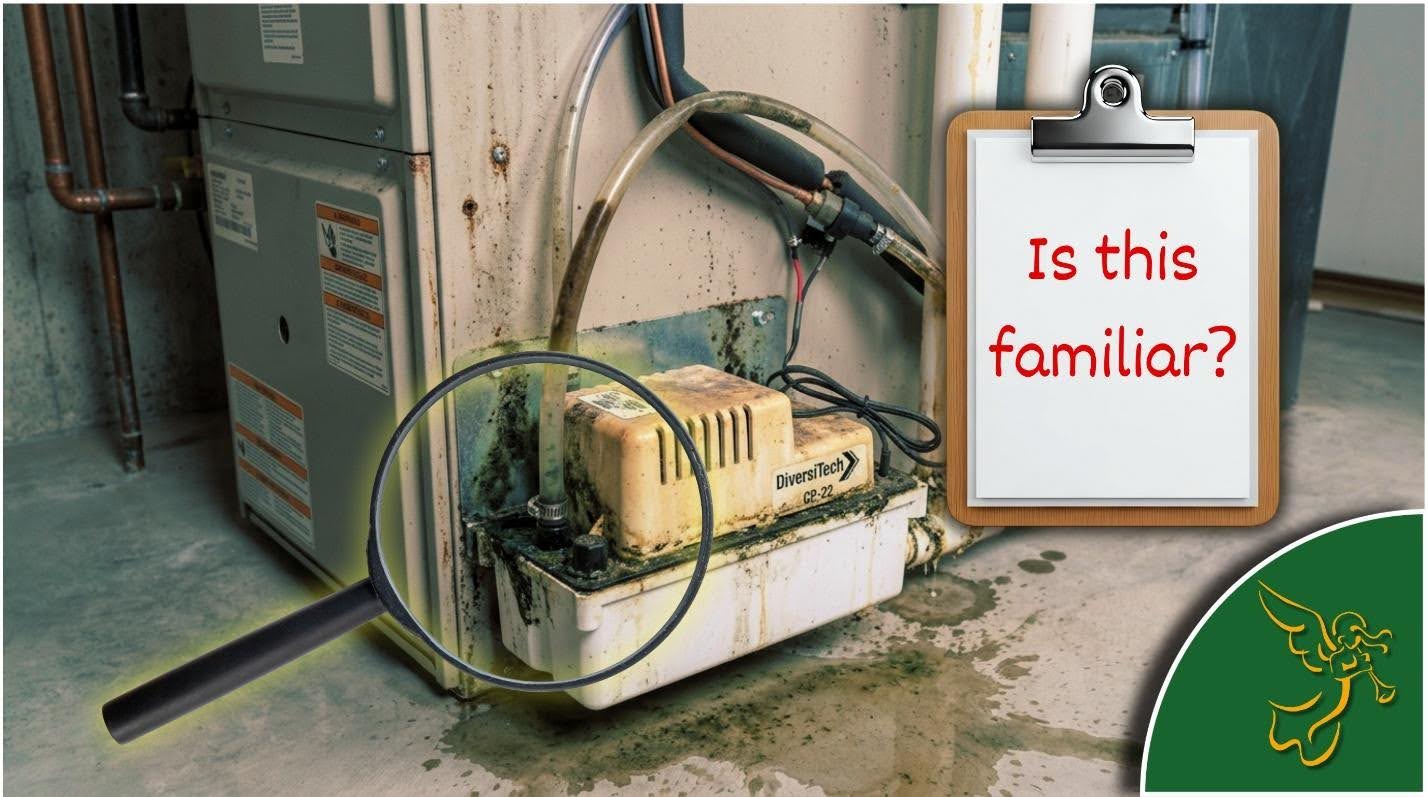
Every summer I get the same call: a homeowner finds a puddle of water around their furnace or indoor AC unit and assumes the worst — a major leak, an expensive repair. More often than not, the culprit is a small part most people don’t even know they have: the condensate pump. It’s cheap, it’s easy to overlook, and when it clogs, it can do thousands of dollars of damage. Let me walk you through it.
What a Condensate Pump Actually Does
When your air conditioner runs, it doesn’t just cool the air — it pulls moisture out of it. All that water has to go somewhere. (High-efficiency gas furnaces produce condensate too.) In most homes, that water drains away by gravity through a simple PVC line.
But when the indoor unit sits somewhere it can’t drain downhill — an attic, a basement, or a closet below the drain line — a condensate pump does the job. It’s a small box with a little reservoir, a float, and a pump motor. Water collects in the reservoir, the float rises, and the pump kicks on to push that water up and out of the house.
In our climate, that pump earns its keep. An Alabama cooling season runs long and hard, and your system can pull gallons of water out of the air on a humid day. That’s a lot of water moving through one small part — all summer long.
Why They Clog and Fail
Here’s the thing about all that warm, damp water sitting in a little plastic box: it’s the perfect place for trouble to grow. The most common reasons a condensate pump quits on you are:
- Algae and slimy buildup. This is the big one in Alabama humidity. A slick biofilm grows in the reservoir and discharge line, eventually choking off the flow.
- Debris and sediment. Dust, dirt, and rust flakes settle into the reservoir and gum up the works.
- A stuck float switch. If the float that tells the pump “turn on” gets stuck or fouled, the pump may never run — or never stop.
- A worn-out motor. Pumps are mechanical parts, and they don’t last forever. An older one simply wears out.
- Kinked or clogged discharge tubing. If the line the water exits through gets blocked or pinched, the water has nowhere to go but up and over.
The Warning Signs
- Water pooling around your furnace or indoor unit. The classic symptom, and usually the first one people notice.
- Your AC suddenly stops cooling. This one trips people up, so pay attention: many pumps have a safety float switch that shuts the whole system off when water backs up, on purpose, to keep your home from flooding. So an AC that quit and a wet floor aren’t a coincidence — they’re connected.
- A musty smell near the unit. Standing, stagnant water in the reservoir starts to smell.
- A pump that runs constantly, makes odd noises, or stays silent when it should be running.
- Water stains on the ceiling below an attic unit. If your system’s in the attic, the first sign may show up on the ceiling underneath it — and by then, damage is already happening.
Why a Cheap Part Deserves Your Attention
This is the part I really want homeowners to hear. A condensate pump is an inexpensive component. But when it fails and water overflows, it doesn’t damage the pump — it damages your floors, your drywall, the ceiling below an attic unit, and it invites mold. A small, affordable part can quietly cause a very expensive mess. And if the safety switch cuts your cooling in the middle of an Alabama July, you’re also without AC until it’s sorted. Staying ahead of it is some of the cheapest insurance in your whole home.
What You Can Do
Some of this is genuinely DIY-friendly, as long as you’re comfortable and safe:
- Unplug the pump, lift out and rinse the reservoir, and clear any visible gunk.
- Flush the drain line with a cup of distilled white vinegar to break down the algae — doing this every couple of months during cooling season goes a long way toward preventing clogs in the first place.
- Make sure the float moves up and down freely.
When it’s better to call us: the pump won’t run at all, it keeps clogging no matter what you do, it needs replacing, there’s any electrical question, or water damage has already started. We’ll clean and test the whole condensate path, confirm that critical safety switch actually works, and replace an aging pump before it fails on the hottest day of the year.
If you’ve found water around your unit — or your AC shut itself off and you’re not sure why — call Perfect Service at 205-206-6091 . We’ll track down the cause, get your system draining the way it should, and make sure that little pump isn’t setting you up for a big repair. Protecting your home sometimes comes down to the smallest parts.
Common Questions About Condensate Pumps
No. Many systems drain by gravity and don’t need one. You’ll typically have a pump when the indoor unit is in a spot it can’t drain downhill from — like an attic, a basement, or a closet below the drain line
That’s a safety feature working as designed. Many pumps and drain pans have a float switch that shuts the system down when water backs up, specifically to stop an overflow from flooding your home. It’s protecting you — it just looks like a breakdown.
Often, yes, for routine cleaning. Unplug it, rinse the reservoir, flush the line with vinegar, and check the float. But replacing the pump, anything involving the wiring, or a clog that keeps coming back is worth a professional’s eyes. How often should I flush the drain line?
A good rule of thumb is every couple of months during the cooling season, or as part of your regular maintenance. Distilled white vinegar poured down the line keeps the algae that causes most clogs from ever taking hold.
They’re wear items, so expect several years of service rather than a lifetime. If yours is getting noisy, unreliable, or clogging often despite cleaning, it’s smarter to replace it on your schedule than to wait for it to fail and flood.