

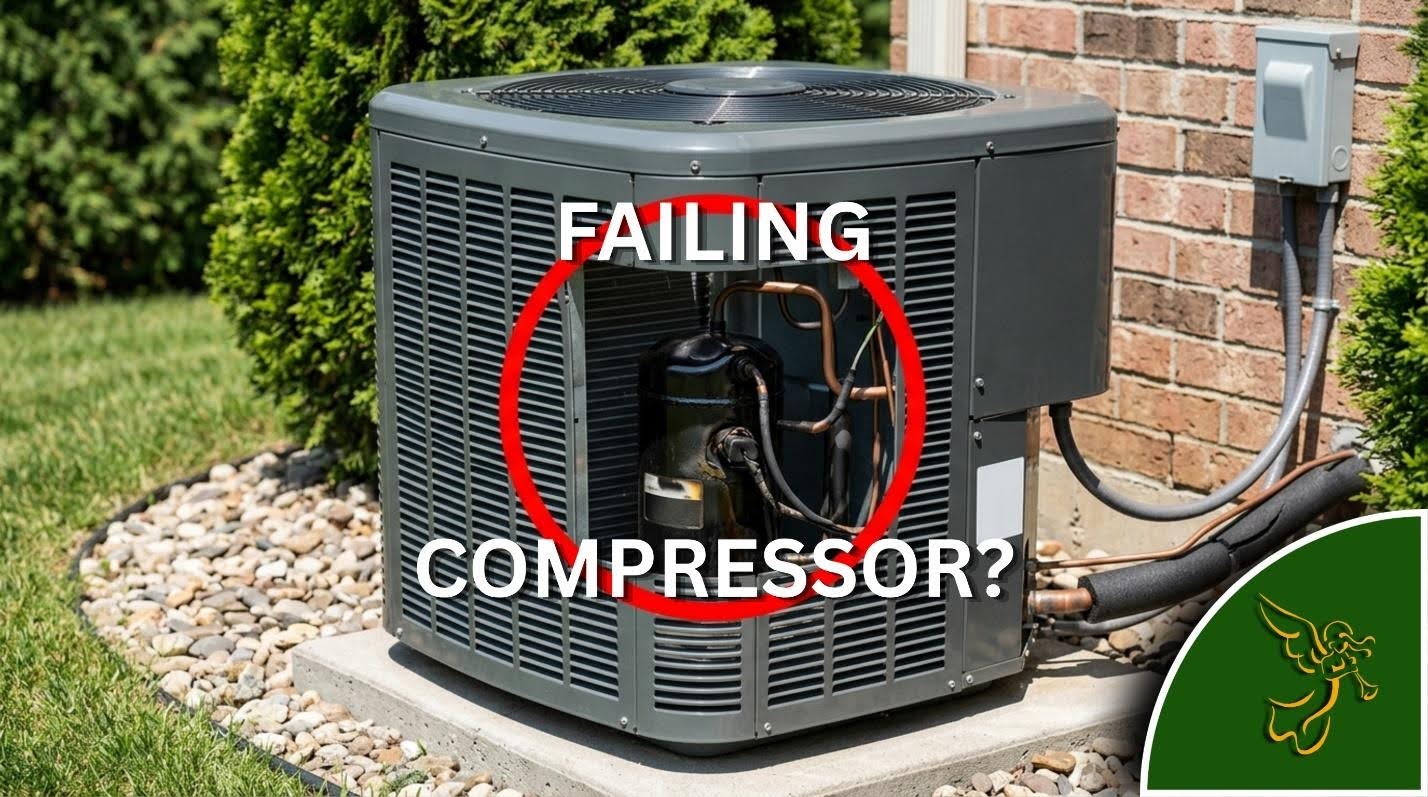
The call I least like making in the middle of July is the one where I have to tell a homeowner the compressor is gone. It’s the heart of the whole air conditioner and the single most expensive part in it — so when it fails, it’s a big decision, and it almost always happens at the worst possible time. Let me explain why summer is so hard on compressors, how to spot one that’s on its way out, and what your honest options are when it finally quits.
What the Compressor Does (and Why It Matters So Much)
Think of the compressor as the engine of your air conditioner. It pumps refrigerant through the system, and that circulation is what actually moves heat out of your home. Everything else — the fans, the coils, the thermostat — supports that one job. When the compressor dies, the system simply can’t cool. There’s no limping along; the heart has stopped.
That’s also why it’s the part nobody wants to replace. It’s expensive on its own, and replacing it is labor-intensive work.
Why Summer Is When They Die
Compressors rarely fail out of nowhere. Usually they’ve been stressed for a while — running low on refrigerant, fighting an electrical problem, choking on dirty coils, or just worn down by age and skipped maintenance. Then an Alabama summer arrives, the system runs almost nonstop against extreme heat and humidity, and that already-strained compressor gets pushed over the edge on the hottest day of the year. The heat doesn’t usually cause the failure by itself — it’s the final straw on top of a problem that was already brewing.
Warning Signs Your Compressor Is Failing
Catching it early sometimes gives you more options, so watch for these:
- Warm air blowing while the AC runs. The fan's going, but the air isn't cold — a classic sign the compressor isn't doing its job.
- The unit struggles or hesitates to start. "Hard starting," sometimes with the lights briefly dimming when it kicks on, points to a compressor straining to turn over.
- The breaker keeps tripping. A failing compressor can draw too much electrical current, repeatedly flipping the breaker. Don't just keep resetting it — that's a warning sign worth a professional diagnosis.
- Loud or unusual noises. Clunking, grinding, rattling, or clattering from the outdoor unit are red flags.
- Excessive shaking or vibration at startup.
- Rising energy bills. A struggling compressor works harder and harder for less and less cooling.
Why It Costs What It Costs
Two things make a compressor repair a big-ticket item: the part itself is the priciest component in the system, and the labor is significant — a technician has to safely recover the refrigerant, swap the compressor, and recharge the system. On an older unit that’s out of warranty, the total can climb toward the cost of a brand-new system, which is exactly why the next decision matters so much.
| Your Situation | The Move | Why |
|---|---|---|
| Under manufacturer warranty | Replace the compressor | The part is often covered, so you may only pay labor — usually well worth it. (Check that your warranty is active and was registered.) |
| Out of warranty, but a newer system | Consider replacing the compressor | If the rest of the unit is young and healthy, a new compressor can buy you years of good service. |
| Out of warranty, older system (10+ years) | Lean toward a new system | Putting an expensive new compressor into an aging unit often isn’t worth it — that money is usually better spent on a new, more efficient system. |
The Honest Bottom Line
There's no single right answer here — it depends on your warranty status and the age and health of your system. Sometimes the smart, honest move is a straightforward compressor repair. Other times, spending big money on the heart of a unit that's already near the end just doesn't add up, and you're better served replacing it. My job is to lay out the real math for your situation and tell you which camp you're in — not to push you toward whichever option happens to be the bigger sale.
A little prevention helps you avoid this conversation altogether: keeping up with maintenance, keeping the coils clean, and addressing refrigerant or electrical issues early are what let a compressor live out its full life instead of dying young in a heat wave.
If your AC is blowing warm, struggling to start, or you suspect the compressor, call Perfect Service at 205-206-6091 . We'll diagnose exactly what failed, check your warranty, and give you straight options with real numbers — so you can make the right call instead of a rushed one. Protecting your home and your wallet is the whole point.
Common Questions About AC Compressors
Yes, in many cases — especially if the part is covered under warranty or the rest of your system is relatively new and healthy. On an older, out-of-warranty unit, though, the cost often makes replacing the whole system the better value.
The compressor part is frequently covered under the manufacturer’s warranty if you’re still within the term and the unit was properly registered — but labor usually isn’t. It’s always worth checking your specific warranty before deciding, since it can change the math completely.
A well-maintained compressor often lasts the life of the system, roughly 10 to 15 years. It dies sooner when it’s been fighting low refrigerant, electrical problems, dirty coils, or a long stretch of skipped maintenance.
The usual culprits are low refrigerant, electrical issues, overheating from dirty coils or blocked airflow, lack of maintenance, and plain old age. An oversized system that short-cycles can wear one out early too.
Peak heat is the stress test. A compressor that’s already weakened by one of the issues above is most likely to give out when it’s running flat-out against extreme Alabama heat — which is why so many failures land in July and August.