

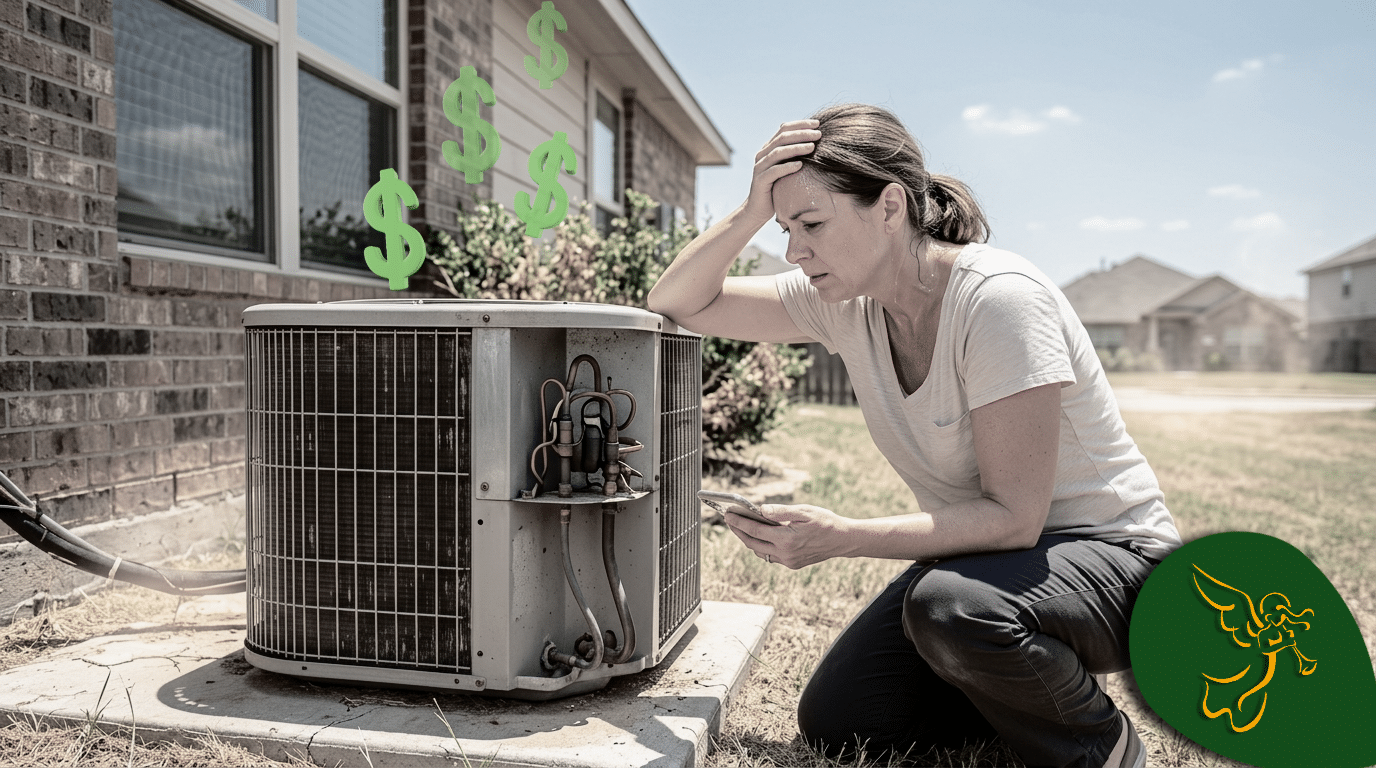
“I’d love to just get one more summer out of it.”
I hear that almost every June, and I get it — nobody wakes up excited to buy a new air conditioner. Sometimes, squeezing another season out of an aging unit is a perfectly fine bet. But when a system is clearly near the end, waiting for it to fail on its own terms can quietly cost you a lot more than replacing it on yours.
Let me lay out the hidden costs, honestly, so you can make the call with your eyes open.
Cost #1: A Breakdown Gives You the Worst Possible Leverage
When your AC quits in the middle of a July heat wave, you’re suddenly making a major decision — often a five-figure one — under pressure and in a hurry. You can’t take your time comparing systems, weighing efficiency options, or thinking through financing. You need cooling now, and “now” is the most expensive word in home repair.
It’s also the busiest time of year for every HVAC company in the Birmingham and Huntsville metros. When the heat spikes, schedules fill up fast, and the system you want may not be the one that’s available the day you need it. Planning ahead flips all of that in your favor — you choose the equipment, the timing, and the terms.
Cost #2: A Dying Unit Bleeds Money All Summer
An old or failing AC rarely just stops one day out of nowhere. More often it limps along for weeks or months first — running longer and longer cycles, struggling to keep up, and using more and more electricity to deliver less and less comfort. That inefficiency shows up quietly on every power bill before the unit ever actually quits. By the time it dies, you may have already paid a meaningful “tax” in wasted energy.
Cost #3: Being Without AC Here Isn’t Just Uncomfortable
This is the one I worry about most. Losing your air conditioning during an Alabama summer, when it’s 95-plus degrees with heavy humidity, isn’t a minor inconvenience — it’s a real health concern, especially for young kids, older family members, and pets. Add in the cost and hassle of a hotel stay while you wait for parts or installation, and the “savings” from waiting evaporate quickly.
Cost #4: Small Problems Become Big Ones
When a system fails, it doesn’t always fail politely. A dying compressor or a refrigerant leak can stress and damage other components on the way out. And once the cooling stops in our climate, indoor humidity climbs fast, which can invite mold and moisture problems on top of the equipment issue. What could have been a planned replacement turns into a bigger, messier emergency.
The Flip Side: What Planning Ahead Buys You
When you get ahead of a replacement instead of reacting to a failure, you get:
- Time to choose well: You can compare systems and pick the right size and efficiency for your home, not just whatever’s in stock.
- Better timing: Installers have more availability outside the peak-heat rush, and you schedule it when it’s convenient for you.
- Calmer decisions: You can include financing on your terms instead of whatever you can arrange in a panic.
- No sweating it out: Literally.
The Honest Caveat
Now, I’m not telling you to rush out and replace a healthy air conditioner. If yours is relatively young and running well, keep it — there’s no sense replacing something with good years left. This isn’t about replacing early. It’s about not gambling on a unit that’s already showing you the warning signs: it’s past 12 years old, it’s needed repairs two or three summers running, your bills are creeping up, and it struggles on the hottest days.
Knowing the difference is everything. If you’re not sure which side of that line your system is on, that’s exactly what we’re here for. Call Perfect Service at 205-206-6091 for an honest assessment. We’ll tell you straight whether your unit has life left or whether you’re better off planning a replacement now — before the heat makes the decision for you.
Common Questions About Replacing Before a Breakdown
Watch for the warning signs: the unit is 12-plus years old, it’s needed repeated repairs, your energy bills are climbing, and it struggles to keep up on the hottest afternoons. If several of those are true, it’s worth having it assessed before peak season tests it for you.
Not always in sticker price, but usually in total cost — you avoid the energy a dying unit wastes, dodge emergency timing when demand is highest, and skip the hotel-and-hassle costs of being without cooling. You also get to make a calm, informed choice.
Not necessarily. If it’s healthy and running well, keep it. This is only about getting ahead of a system that’s clearly near the end, not replacing one with good life left.
Beyond the unit itself: months of inflated power bills, the premium of an emergency in peak demand, possible hotel stays, and the risk of collateral damage to other components or humidity problems in the home.
Absolutely. An honest assessment now tells you roughly how much runway your system has, and we can walk you through financing options so a future replacement fits your budget on your schedule