

We hear it all the time: “Is my air conditioning unit working properly?”
We hear it all the time: “Is my air conditioning unit working properly?” The question is asked by many people during the hot summer months and sometimes, the answer depends heavily on which floor they’re on. A second-floor room can often be much hotter than a downstairs living space during summer, and there are some basic reasons (five of them, actually) for why it happens.
A second-floor room can often be much hotter than a downstairs living space during summer, and there are some basic reasons (five of them, actually) for why it happens.
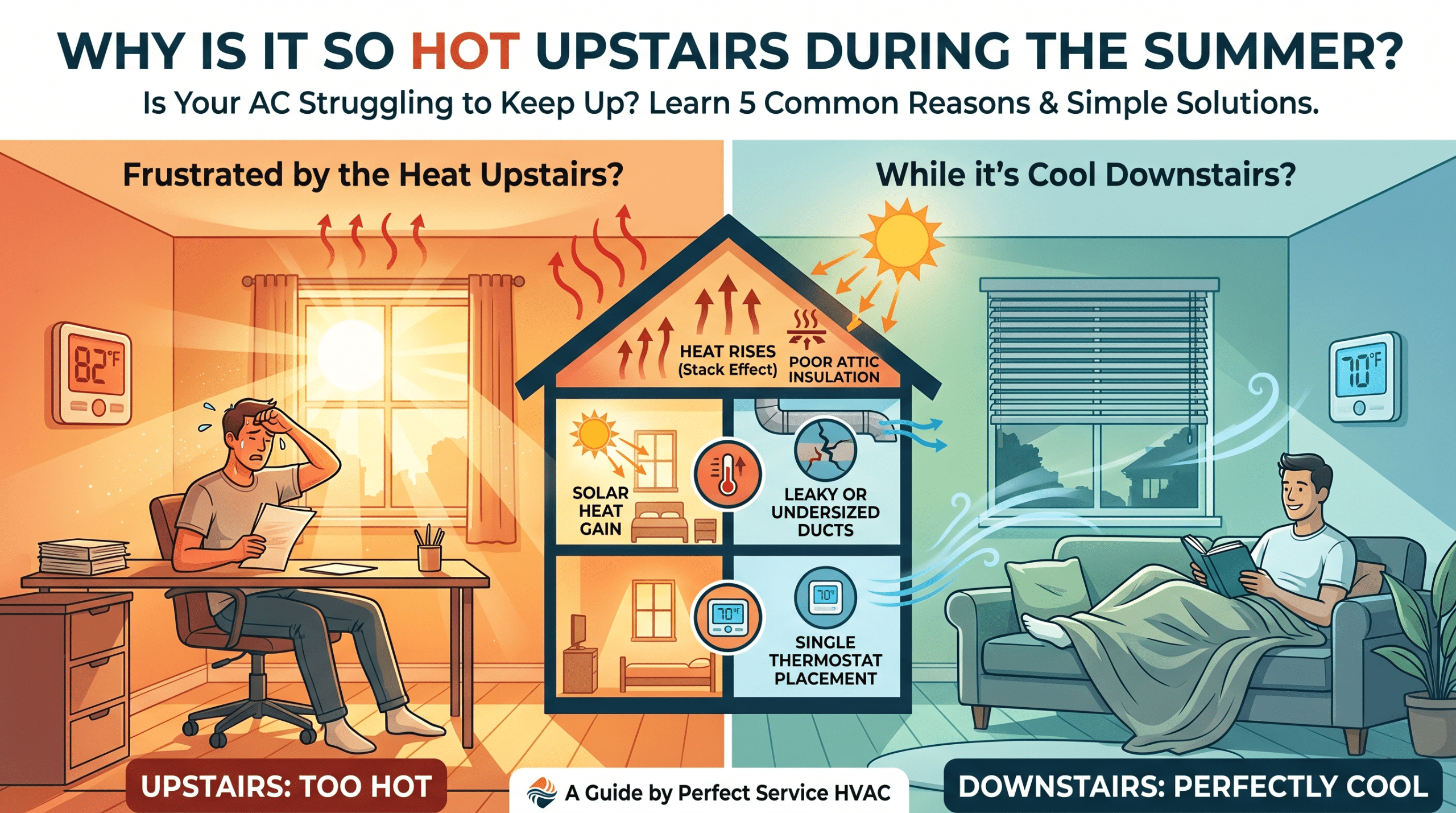
- Heat Rises (The Stack Effect): Warm air is less dense than cold air, causing it to naturally migrate upward. As heat builds in the upper levels, warm air leaking out of the top of your house pulls cooler outside air into the lower levels.
- Poor Attic Insulation: If your attic is poorly insulated, the intense heat absorbed by your roof transfers directly into your second-story ceiling. This radiant heat can turn your upstairs into an oven, overwhelming your air conditioner.
- Leaky or Undersized Ducts: Conditioned air must travel further to reach the second floor. If your air ducts are leaky or poorly sealed, you can lose 20-30% of your cool air before it reaches the upstairs vents.
- Thermostat Placement: Most homes use a single thermostat located on the cooler first floor. Once the ground level reaches your set temperature, the AC shuts off, leaving the warmer second floor unsatisfied.
- Solar Heat Gain: Second-floor rooms receive significantly more direct sunlight through their roofs and windows than the shaded ground floor. Sunlight streaming through unshaded windows acts like a greenhouse, rapidly increasing the room temperature.
So, now on to the more important questions: What can you do about it and what can we do to help?
“The upstairs unit always works the hardest because the humidity rises during the summer and cold air falls naturally,” said Perfect Service General Manager Joey Irwin, “We work with customers to make sure their systems stay clean and efficient and make sure their systems run perfectly during the harshest times of year.”
The process is part of a joint effort between you and our service technicians.
“We work with customers to remind them about changing their filters and keeping the air flow open,” Irwin said. “We want to help our customer base so they’re not having to make a lot of unnecessary repairs every year.”
Changing your filters sounds so simple, but it’s something that definitely needs to be discussed.
“Failure to change your filters and keep that air flow open can lead to some really nasty problems,” Irwin said. “If we reach that point, we have to assess the situation and check the system to see how bad it’s gotten. Once we clean that unit and all of the parameters have been met, we just keep preventative maintenance going.
“We hope everyone realizes that it’s just easier to keep up the maintenance ahead of time, just like it is with changing the oil in your car — and we make it a point to stress that to the customer.”
Is it too hot on the second floor of your home?
Give us a call at 205-206-6091 or contact us online. We’ll work with you to find a solution — no matter how simple or how complex it is.
It usually comes down to five distinct factors: heat naturally rising (the stack effect), poor attic insulation transferring roof heat, leaky ductwork losing up to 30% of conditioned air, a single ground-floor thermostat shutting down the system prematurely, and intense solar heat gain through unshaded windows and the roof.
As Joey Irwin notes, the upstairs unit always works the hardest because summer humidity naturally rises while heavy, cold air falls back down to the first floor, leaving the upper levels under a constant thermal load.
Absolutely. Restricting your system's airflow by failing to change your air filters can lead to severe mechanical issues. Keeping airflow completely clear ensures the system can push conditioned air all the way upstairs efficiently without forcing unnecessary and expensive emergency repairs.
Consistent preventative maintenance is key. Just like changing the oil in your car, taking care of your HVAC system ahead of time keeps it operating perfectly through peak seasonal demand and prevents major breakdowns before they start.