

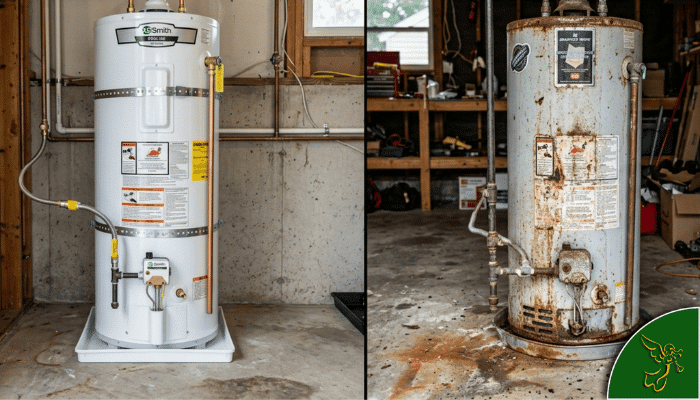
A standard tank water heater typically lasts 8 to 12 years, while a tankless unit can last 15 to 20 years — but Alabama's hard water can shorten both if the unit isn't maintained. Mineral scale and sediment build up over time, straining the heating elements and cutting efficiency. Regular flushing, an anode rod check for tank units, and descaling for tankless units are what let a water heater reach or exceed its expected lifespan.
One of the most common questions we get is simple: "How much longer do I have with this water heater?" The honest answer depends on the type of unit you have — and, in our part of the country, on something a lot of homeowners don't think about: hard water.
The Baseline Lifespans
A standard tank water heater typically lasts 8 to 12 years with reasonable care. A tankless water heater generally lasts longer, often 15 to 20 years, since it isn't storing and reheating a standing reservoir around the clock.
Those numbers assume decent water conditions and at least some basic maintenance. Here in Alabama, hard water is the variable that can pull those numbers down.
Why Hard Water Shortens the Life of a Water Heater
Our water carries a meaningful mineral content — mainly calcium and magnesium. Every time that water is heated, some of those minerals drop out of solution and settle as scale and sediment.
In a tank water heater, that sediment collects at the bottom, insulating the water from the heating element or burner below it. The unit has to work harder and longer to heat the same amount of water, which raises your energy bill and stresses the components. It's also what causes that popping or rumbling sound, and enough buildup over the years can lead to premature tank failure.
In a tankless unit, scale coats the heat exchanger itself, reducing its efficiency and — if left unaddressed long enough — potentially damaging the unit or shortening its life well below that 15-to-20-year ceiling.
What Actually Extends the Life
Annual (or more frequent) tank flushing. Draining and flushing a tank clears out settled sediment before it builds into a real problem. This is the single biggest lifespan factor for a tank unit in our water.
Anode rod checks (tank units). The anode rod is a sacrificial component designed to corrode instead of your tank. Checking and replacing it every few years protects the tank itself from the kind of corrosion that leads to rusty water and leaks.
Periodic descaling (tankless units). A descaling flush clears mineral buildup from the heat exchanger, keeping it efficient and extending its service life.
Addressing hardness at the source. A whole-home water treatment system reduces the mineral load hitting your water heater (and everything else) in the first place, taking real pressure off both tank and tankless units.
The Bottom Line
Hard water doesn't have to cut your water heater's life short — it just means maintenance matters more here than it might somewhere with softer water. A water heater that gets regular attention can reach or even exceed its expected lifespan; one that never gets flushed often falls well short of it.
If you're not sure how old your water heater is, when it was last flushed, or whether it's showing its age, call Perfect Service at 205-206-6091 or contact us online. We'll check it out, give you an honest read on how much life it has left, and help you protect that investment for the long haul.
Common Questions About Water Heater Lifespan
The manufacture date is usually encoded in the serial number on the unit's label, though the format varies by brand. We can help you decode it if you're not sure.
Once a year is a good standard in our hard water, though homes with especially high hardness may benefit from more frequent flushing.
Yes — periodic descaling is important for tankless units in hard water areas. Skipping it reduces efficiency over time and can shorten the unit's lifespan.
Rumbling or popping noises, rusty water, inconsistent temperatures, leaks, or an age near or past its typical lifespan are all signs it's worth having evaluated.
Yes, generally. Reducing the mineral content in your water reduces the scale buildup that stresses both tank and tankless units, which can meaningfully extend their working life.