

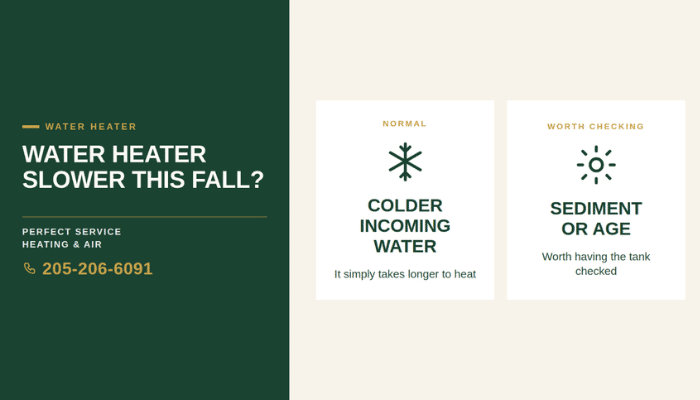
A water heater taking longer to heat up as fall arrives is often just the colder incoming water requiring more work to reach temperature — some seasonal slowdown in recovery time is completely normal. But it can also point to sediment buildup, a failing heating element or burner, or an aging unit losing efficiency. If the slowdown feels disproportionate to the season, that's the signal to have it checked.
If your hot water seems to take noticeably longer to actually get hot as the weather cools down, there's a real, simple explanation — and sometimes a less simple one worth ruling out too. Let's cover both.
The Simple, Seasonal Explanation
As temperatures drop in fall, the water coming into your home from the supply line is colder than it was over the summer. Your water heater has to raise that colder incoming water to your desired temperature, which takes more time and energy than heating water that started out warmer. Some seasonal slowdown in recovery time is completely normal and expected.
When It's More Than Just the Season
If the change feels disproportionate to a normal seasonal shift — dramatically slower, not just a little — that's worth paying attention to rather than assuming it's entirely the colder incoming water.
Sediment buildup can affect heating efficiency, since sediment sitting between the heating element and the water insulates them from each other, forcing the unit to work harder and longer to heat the same amount of water. It's the same buildup behind popping and rumbling water heater noises.
A failing heating element (in electric units) or a struggling burner (in gas units) can mean the unit simply isn't producing heat as effectively as it used to, regardless of incoming water temperature.
General aging can mean a unit nearing the end of its life recovers more slowly across the board, not just seasonally.
How to Tell the Difference
If the slowdown feels proportional — noticeably colder mornings, water taking somewhat longer, but nothing dramatic — that's likely just the normal seasonal effect. If it's a significant, frustrating change, especially combined with other signs like inconsistent temperature or unusual noise, that points toward something beyond simple seasonal variation.
Why Fall Is a Good Time to Check Anyway
Much like a fall furnace check, fall is a reasonable natural checkpoint for your water heater too — confirming it's ready for the season of increased demand that colder weather often brings, from longer showers to more hot water use generally.
The Bottom Line
Some seasonal slowdown in your water heater's recovery time is normal and expected as incoming water gets colder. A dramatic or disproportionate change is worth having checked, since it may point to sediment, a failing component, or an aging unit rather than just the season.
Call Perfect Service at 205-206-6091 or contact us online if your water heater's performance seems off this fall, serving Huntsville, the Tennessee Valley, and the Birmingham metro.
Common Questions About Fall Water Heater Performance
Some noticeable but modest increase in recovery time is expected as incoming water gets colder. A dramatic change is the signal to have it checked rather than assumed normal.
Sediment builds up gradually year-round, but its effect on heating efficiency can become more noticeable once the water heater has to work harder against colder incoming water on top of the existing buildup.
It's a reasonable prompt to have it checked and potentially flushed, especially if it's been a while since the last one — hard water makes an annual flush a good habit in our area.
A predictable, modest seasonal pattern each year is generally normal. It's a sudden or worsening change, especially compared to previous falls, that's worth investigating.
Yes, to some extent — tankless units also have to work harder to heat colder incoming water, though the specific mechanics differ from a tank unit's recovery time.