

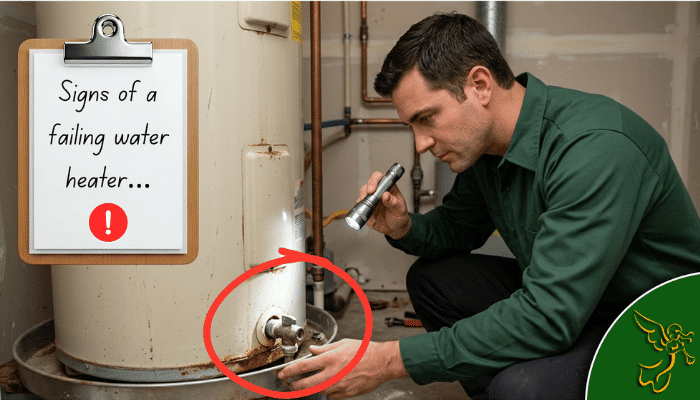
Warning signs a water heater is nearing failure include rusty or discolored hot water, rumbling or popping noises, water pooling around the base, inconsistent or lukewarm temperatures, a metallic smell or taste, and an age past 8 to 12 years for a tank unit. Catching these early lets you plan a replacement on your own schedule instead of dealing with a sudden leak or flood.
A water heater rarely fails without warning — it usually gives you a heads-up first, if you know what to look for. Catching those signs early means you get to plan a replacement on your terms, instead of discovering a failed unit through a flooded utility closet. Here's what to watch for.
Rusty or Discolored Hot Water
If your hot water starts running rusty, brownish, or discolored — especially when the cold water from the same source runs clear — it's often a sign of corrosion happening inside the tank. Once a tank starts rusting from the inside, it's usually a matter of time before it fails.
Rumbling or Popping Noises
This is usually sediment buildup at the bottom of the tank. On its own, it's often fixable with a flush — we cover the full story in why your water heater makes popping or rumbling noises. But it's also a signal the unit hasn't had regular maintenance, which raises the odds other wear is happening too.
Water Around the Base of the Unit
Any pooling water near your water heater deserves immediate attention. It could be something minor like a loose fitting, but it can also mean the tank itself has cracked or is failing internally. Don't wait on this one — a small leak today can become a real flood tomorrow.
Inconsistent or Lukewarm Water
If your hot water temperature has become unpredictable, or you're simply not getting water as hot as you used to, it can point to a failing heating element, a sediment layer insulating the water from the heat source, or a unit that's reaching the end of its efficient life.
Age
A standard tank water heater typically lasts 8 to 12 years. If yours is in or past that range, age alone is a reason to have it evaluated, even without any obvious symptoms — the risk of a sudden failure climbs the older a unit gets.
Strange Smells or Metallic Taste
A metallic taste or smell in your hot water can indicate internal tank corrosion — another sign the unit is nearing the end of its service life.
Why Catching This Early Matters
The real risk with an aging water heater isn't a slow decline — it's a sudden tank failure that dumps 40-plus gallons of water onto your floor, potentially damaging flooring, drywall, and anything stored nearby. Spotting the warning signs ahead of time lets you plan and budget for a water heater replacement instead of dealing with a flood and an emergency repair at the same time.
One factor worth knowing: much of what wears a tank out early — corrosion and sediment — is driven by Alabama's hard water. If you're replacing a unit that failed ahead of schedule, whole-home water treatment can help the next one last longer by tackling the mineral content at the source.
Don't Wait for the Flood
If your water heater is showing any of these signs, or it's simply getting up there in age, call Perfect Service at 205-206-6091 or contact us online. We'll give you an honest read on its condition and help you plan the right next step — before it makes the decision for you.
Common Questions About Water Heater Failure
It varies, but most units show some combination of these signs — noise, discoloration, inconsistent temperature — for a while before an outright failure. That's exactly why paying attention to them matters.
It's always worth checking promptly. Sometimes it's a simple fitting issue, but it can also be the early sign of a tank failure, and there's no way to tell for sure without inspecting it.
Sometimes, depending on the issue — a heating element or valve can often be repaired. But once the tank itself is corroding or leaking, replacement is generally the only real fix.
If it's within or past the typical 8-to-12-year lifespan, it's worth having evaluated even without symptoms. Planning a replacement before a failure is almost always easier and cheaper than dealing with an emergency.
If you can do so safely, shut off the water supply and the power (or gas) to the unit, then call for an inspection promptly. Don't wait to see whether it gets worse.