

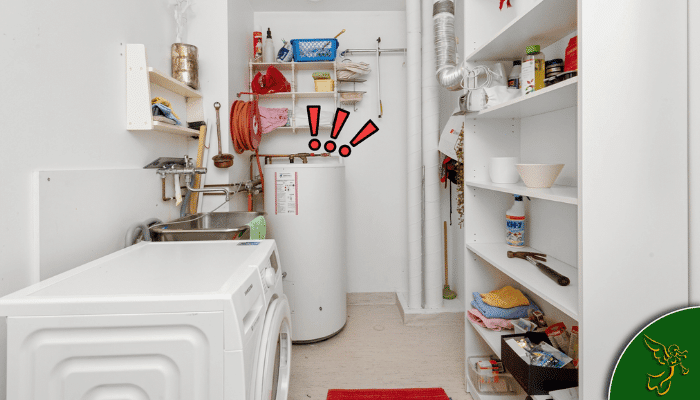
Popping or rumbling from a tank water heater is almost always sediment buildup at the bottom of the tank — water gets trapped under the mineral layer, boils, and pops as steam escapes. It's especially common in a hard-water area like Alabama. A professional tank flush usually clears it up, but sediment left for years can make the heater work harder, shorten its life, and eventually lead to leaks.
If your water heater has started making a popping, cracking, or rumbling sound — almost like popcorn in the bottom of the tank — you're hearing one of the most common water heater complaints we get. It sounds alarming, but the cause is usually straightforward, and it's very much a byproduct of living with Alabama's hard water.
What's Actually Happening
Inside a tank water heater, hard-water minerals settle to the bottom over time as sediment. As that layer builds up, it sits between the heating element (or burner) and the water above it.
When the unit heats up, water gets trapped in and under that sediment layer. As it heats, that trapped water turns to steam and pushes its way up through the sediment, creating the popping and rumbling you're hearing. The thicker the sediment layer, the louder and more frequent the noise tends to be.
Why It Happens So Often Here
This is a hard-water problem through and through. The minerals in our local water supply — mainly calcium and magnesium — are exactly what settles out and forms that sediment layer. The homes we hear about most are the ones with especially hard water, or water heaters that have gone years without a flush.
Is It Dangerous?
The noise itself isn't an emergency, but it's not something to ignore indefinitely either. A heavy sediment layer makes your water heater work harder and less efficiently, since it's essentially insulating the water from the heat source. Left unaddressed for years, that buildup can stress the tank, contribute to premature failure, and in some cases lead to leaks.
The Fix
The standard fix is a professional tank flush, which clears out the sediment and quiets the noise. If the buildup has been accumulating for a long time, it may take more than one flush to fully clear — and in some cases, heavy long-term sediment can't be entirely reversed. That's exactly why we recommend flushing before the sediment gets that severe in the first place.
Prevention Going Forward
Once your tank is flushed, an annual flush keeps sediment from building back up to noisy levels. And if you're tired of dealing with hard-water buildup across your whole home — not just the water heater — a whole-home water treatment system tackles the mineral content at the source, taking pressure off the water heater and every other fixture and appliance in the house.
Hearing the Noise? Let's Take a Look
If your water heater has started making noise, call Perfect Service at 205-206-6091 or contact us online. We'll flush the tank, check its overall condition, and tell you honestly whether it just needs routine maintenance or whether the sediment has been building long enough that it's worth discussing your options.
Common Questions About Water Heater Noises
Not necessarily — the noise itself is usually just sediment, not an imminent failure. But it is a sign the unit needs attention, and ignoring it for years can eventually shorten its life.
Usually yes, especially if it's caught relatively early. Very heavy, long-term buildup may take more than one flush, and severe cases might not fully return to silent operation.
About once a year is a good standard in our hard water. Homes with especially hard water may benefit from flushing more often.
It's doable for a comfortable DIYer, but if you're not familiar with the process, a professional flush makes sure it's done safely and completely — and it's a good chance to have the whole unit checked at the same time.
Not in the same way, since there's no standing tank for sediment to collect in. Tankless units deal with scale on the heat exchanger instead, which is why they need periodic descaling rather than flushing.