

Quick Answer
A proper crawlspace encapsulation is a system, not a single step: it typically includes sealing the foundation vents, installing a heavy-duty vapor barrier across the floor and up the walls, sealing every seam and penetration, and adding a dedicated dehumidifier sized for the sealed space. If the crawlspace has active water intrusion, drainage improvements or a sump pump may be part of the project too. The exact scope always depends on your specific crawlspace's condition and needs.
"Encapsulation" gets used as a catch-all term, but the actual project involves several distinct components working together. Here's what a proper encapsulation includes, so you know exactly what you're evaluating.
Sealing the Vents
Traditional crawlspaces have foundation vents designed to let outside air in. The first step in encapsulation is sealing those vents, since they're the main pathway humid outside air uses to enter the space.
The Vapor Barrier
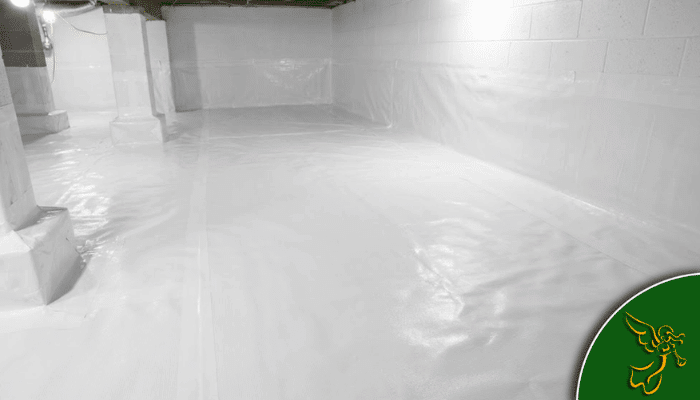
This is the centerpiece of the project: a heavy-duty plastic vapor barrier installed across the entire crawlspace floor and up the foundation walls. It creates a physical barrier between the ground (a constant moisture source) and the air in the crawlspace above it.
Sealing Seams and Penetrations
The vapor barrier is only as good as its seal. Seams between sheets need to be properly sealed, and any penetrations — pipes, posts, and other elements passing through the barrier — need to be sealed around individually so the whole system stays airtight.
Dehumidifcation
Sealing the space keeps outside humidity from entering, but any residual moisture still needs somewhere to go. Most proper encapsulations include a dedicated dehumidifier sized for the crawlspace, actively keeping the sealed environment dry rather than just relying on the vapor barrier alone.
Drainage, If Needed
If the crawlspace has an actual water intrusion problem — not just humidity, but real water getting in from grading issues or groundwater — drainage improvements or a sump pump may be part of the project as well, addressing water before it can pool inside the sealed space.
Why Each Piece Matters
Skipping any one of these can undermine the whole project. Sealing vents without a vapor barrier still leaves ground moisture rising into the space. Installing a vapor barrier without dehumidification can still leave residual humidity unmanaged. And sealing a crawlspace with an active water intrusion problem, without addressing drainage, just gives that water a sealed container to sit in.
The Bottom Line
A proper encapsulation is a system, not a single step — vents sealed, a real vapor barrier installed and sealed at every seam, humidity actively managed, and drainage addressed if water intrusion is present. Understanding the full scope helps you evaluate whether a quote actually covers what your crawlspace needs.
If you're considering encapsulation, call Perfect Service at 205-206-6091 or contact us online. We'll assess your specific crawlspace and lay out exactly what it needs — not a generic package that may be missing a piece your home actually requires.
Common Questions About Crawlspace Encapsulation
In most cases, yes — the vapor barrier keeps ground and outside moisture out, but a dehumidifier actively manages whatever humidity remains in the sealed space.
No — vents alone address one pathway for moisture, but without a proper vapor barrier and humidity control, ground moisture and residual humidity remain unaddressed.
It varies by crawlspace size and condition, but most residential projects can be completed in a matter of days.
Not on its own — if actual water is entering the space, drainage improvements need to be part of the project alongside the vapor barrier and sealing.
That depends on what's actually happening in your specific crawlspace, which is why an inspection comes before any recommendation.