

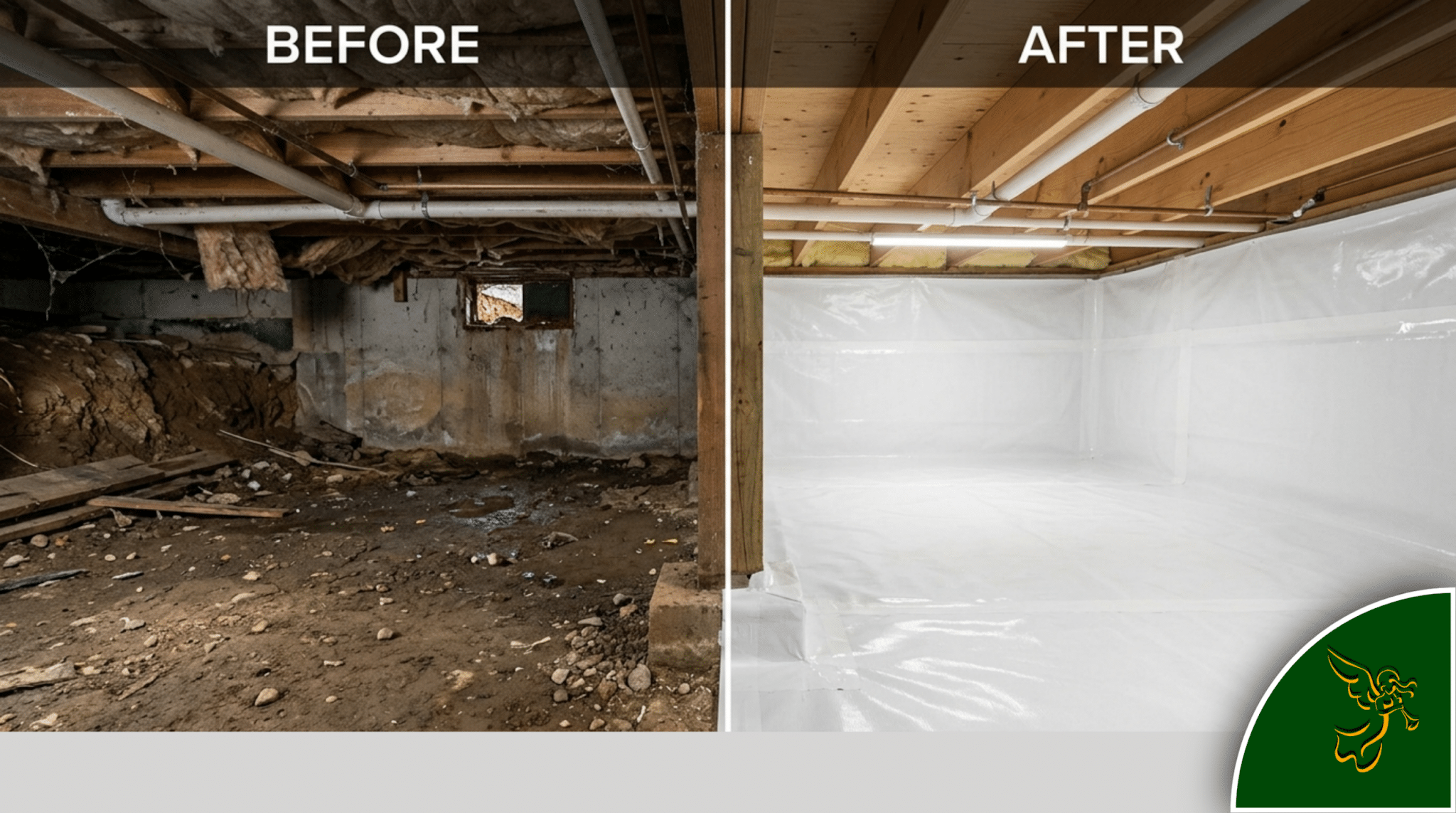
Which Crawlspace is Right For You?
The space under your house doesn’t get much thought until something goes wrong down there. But how that crawlspace is set up — vented and open to the outside, or sealed off from it — has a real effect on your air quality, your energy bills, and the long-term health of your home. There are two competing philosophies here, and in a climate like ours, the difference matters more than most homeowners realize.
The Vented Crawlspace: The Old Standard
For decades, the standard approach was to build crawlspaces with vents around the foundation. The thinking was simple: let outside air flow through, and it’ll keep the space dry.
That logic works in a dry climate. In humid Alabama, it often does the opposite. Those vents invite warm, moisture-heavy outdoor air into a cool space under your house, where it condenses on the cooler surfaces — the ground, the framing, the ductwork. Instead of drying the crawlspace out, the vents can end up feeding it moisture all summer long, setting the stage for mold, wood rot, and musty air.
The Sealed (Encapsulated) Crawlspace
A sealed crawlspace flips the approach. The vents are closed off, a heavy vapor barrier is installed across the ground and up the walls, and the space is kept dry with controlled humidity — often a dedicated dehumidifier. The goal is to keep the humid outside air out entirely, so moisture never gets the chance to condense and cause problems.
Why Our Climate Tips the Scale
Two things make this decision lean the way it does in Birmingham and Huntsville: relentless humidity, and the stack effect. Because air naturally rises and escapes the top of your home, replacement air gets pulled up from the crawlspace — a large share of the air you breathe upstairs started below. A damp, musty vented crawlspace doesn’t just stay a crawlspace problem; it becomes the air in your living room.
Vented vs. Sealed at a Glance
| Vented Crawlspace | Sealed / Encapsulated | |
|---|---|---|
| Moisture control | Relies on airflow; struggles in humidity | Actively keeps humid air out |
| Mold and rot risk | Higher in a humid climate | Much lower |
| Effect on energy bills | Can raise them (humid air is harder to condition) | Often lowers them |
| Air quality upstairs | Can pull damp, musty air into the home | Cleaner, drier air |
| Upfront cost | Low (already built in) | Higher (a real investment) |
| Best for | Dry, well-draining lots | Most Alabama homes |
The Honest Take
For the large majority of homes in our area, sealing the crawlspace is the more reliable long-term choice — it protects the structure, improves the air upstairs, and often pays back in comfort and lower bills. That said, it’s a real investment, and not every home is in crisis. A crawlspace on a dry, well-draining lot that’s staying genuinely dry may be doing just fine as-is. The only way to know which camp your home is in is to actually get down there and look at what’s happening.
If you’re weighing what to do under your house, call Perfect Service at 205-206-6091 . We’ll inspect your crawlspace, tell you honestly whether it needs sealing or just some targeted fixes, and lay out your options with no pressure. Protecting what’s under your home is part of protecting everything on top of it.
Building codes have evolved, and sealed crawlspaces are widely recognized and permitted today. In humid climates like ours, the old “vents keep it dry” assumption has largely given way to the understanding that sealing performs better.
It often does. Damp air is harder and more expensive to heat and cool, and a sealed, dry crawlspace means your system isn’t fighting that extra moisture — plus you’re no longer conditioning air that leaks in through open vents.
Usually, yes. Sealing keeps outside humidity out, and a dehumidifier (or conditioned air) manages whatever moisture remains, keeping the space reliably dry. The right setup depends on your specific crawlspace.
Sealing vents without a proper vapor barrier and moisture control can actually trap moisture and make things worse. Encapsulation is a system, not a single step, which is why it’s worth having it assessed and done correctly.
Warning signs include a musty smell in the house, high indoor humidity, condensation or rust under the home, and worsening allergies. If you’re noticing those, it’s worth having the crawlspace evaluated.