

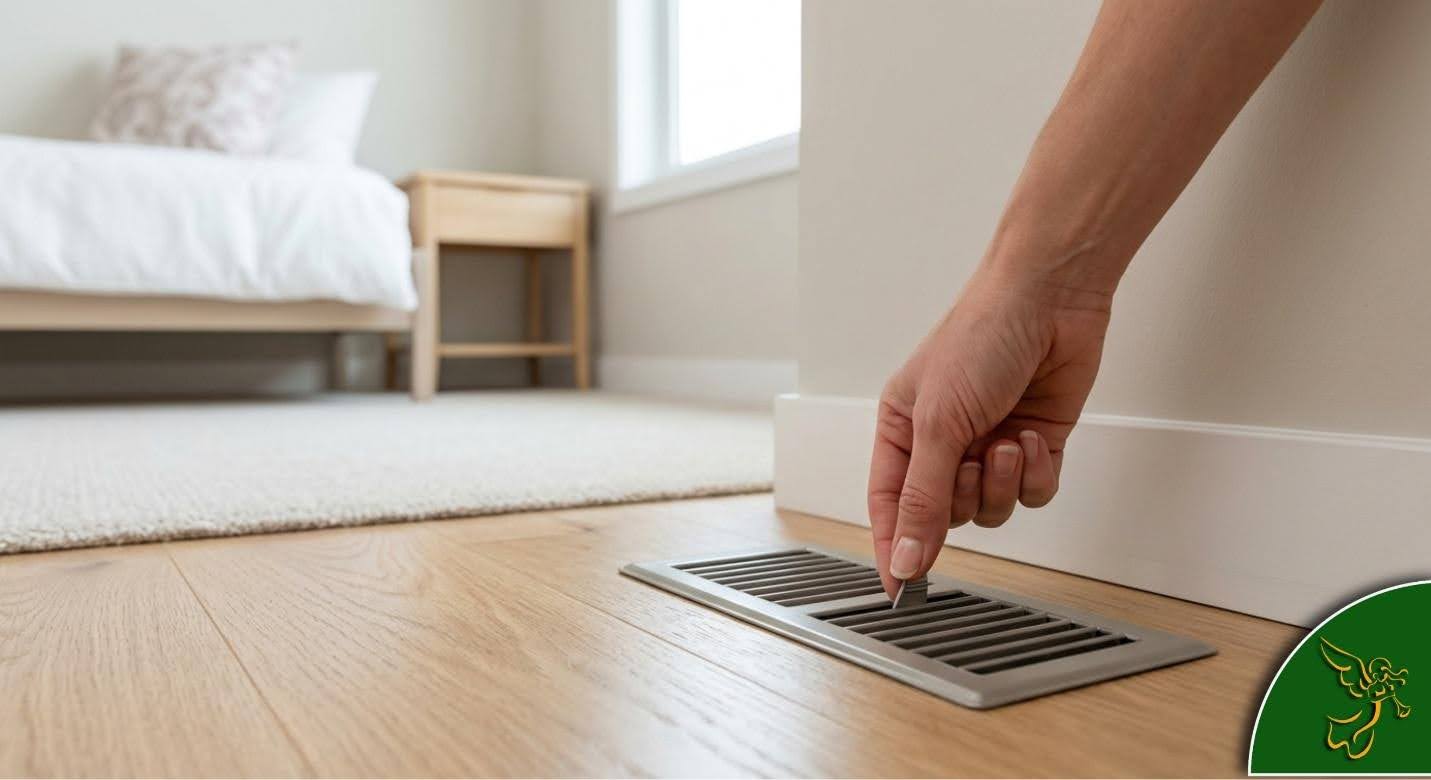
It seems like common sense: if you're not using a room, why cool or heat it? A lot of homeowners close the vents in spare bedrooms or rarely used spaces expecting to save money. Unfortunately, the science doesn't back this one up — and it can actually work against you.
Why It Doesn't Work the Way You'd Think
Most residential HVAC systems are designed around a specific, fixed amount of airflow moving through the ductwork. The system doesn't "know" a vent is closed and simply send less energy to that room — instead, closing a vent increases the air pressure inside the ducts, since the same amount of air is now being forced through fewer open outlets.
That extra pressure has to go somewhere. It often pushes air out through any small leaks or gaps in the ductwork — which most duct systems have somewhere — wasting the energy you were trying to save. The blower motor also has to work harder against that increased resistance, which adds strain and can shorten its life over time.
The Bigger Picture
Your AC and furnace are sized for your home's total square footage, based on the assumption that air is moving through the whole system as designed. Closing off multiple vents shrinks the effective space the system is delivering air to, without changing how much conditioning it's producing — which can throw the whole system out of the balance it was designed for.
What Actually Helps
If a room genuinely doesn't need to be conditioned as much, the better approaches are a properly designed zoning system (which uses dampers engineered for exactly this purpose, unlike simply shutting a vent), or if it's an isolated space like a converted garage or bonus room, a dedicated mini-split that handles that space independently without affecting the main system's airflow balance at all.
Simply shutting the vent yourself, without either of those, is the one approach that tends to cause more problems than it solves.
The Bottom Line
Leave your vents open, even in rooms you don't use often. If you genuinely want to reduce conditioning to specific spaces, a real zoning solution or a dedicated mini-split accomplishes that goal properly, without stressing your main system.
If you've been closing vents to save money and want a better solution, call Perfect Service at 205-206-6091 or request service online. We'll look at your home and give you an approach that actually works instead of one that quietly works against you.
Common Questions About Closing Vents
The effects are often gradual rather than dramatic, showing up as slightly reduced efficiency and added strain on the blower over time rather than an immediate obvious problem, which is why it's easy to not notice.
A single vent has a smaller impact than several, but the same basic issue applies. It's generally better to leave all vents open and address specific room comfort a different way.
Yes — return vents matter just as much as supply vents for keeping the system's airflow properly balanced. Those shouldn't be blocked either.
A zoning system uses dampers specifically engineered into the ductwork design to redirect airflow properly, unlike a vent register, which isn't designed to handle that role and creates pressure problems instead.
For a room you'd rather not condition through the main system at all — like an infrequently used bonus room — a dedicated mini-split can be a great solution that doesn't affect your main system's balance.