

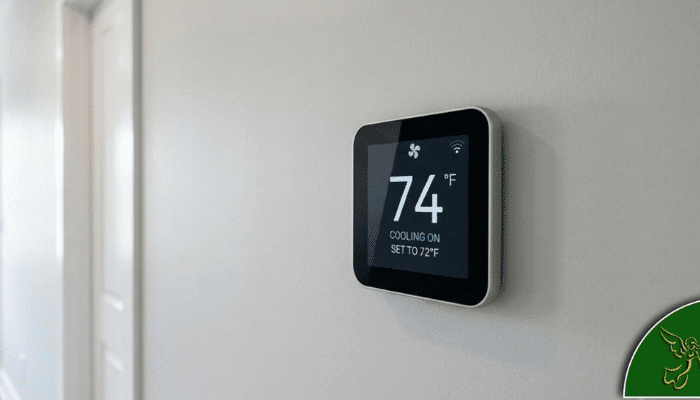
A thermostat placed near a window, in direct sunlight, close to a supply vent, or on an exterior wall will read the temperature inaccurately, causing your AC or furnace to run too much or too little. The best spot is an interior wall in a commonly used room, away from direct sun, vents, doorways, and heat-generating appliances, mounted at about chest height.
Your thermostat is the brain of your whole comfort system, but its decisions are only as good as the information it's getting. If it's mounted in the wrong spot, it can misread your home's actual temperature and cause your AC or furnace to run at the wrong times entirely.
How Bad Placement Throws Everything Off
A thermostat only knows what's happening in the air immediately around it. If that air isn't representative of your home overall, the whole system reacts to the wrong signal.
Direct sunlight warms the thermostat itself, so it thinks the room is hotter than it is and can send your AC into overdrive, cooling the house more than necessary.
Near a supply vent, it feels the conditioned air blowing directly on it and shuts the system off early, before the rest of the room actually reaches temperature.
On an exterior wall, it's influenced by outdoor temperature bleeding through the wall, especially in extreme heat or cold.
Near a kitchen or other heat-generating appliances, it can read artificially warm and run the AC more than the home actually needs.
Near doorways or drafty spots, it picks up temperature swings that don't reflect the rest of the room.
Where a Thermostat Should Go
The ideal spot is an interior wall, in a room you use often (a hallway or living area works well), away from direct sunlight, vents, doorways, and appliances — mounted at roughly chest height, about 52 to 60 inches from the floor, away from the extremes of both the ceiling and the floor.
When to Have It Looked At
If your comfort feels inconsistent and you suspect your thermostat might be part of the problem, call Perfect Service at 205-206-6091 or contact us online. We'll look at its placement and your system as a whole, and make sure the brain of your comfort system is getting an accurate picture.
Common Questions About Thermostat Placement
Often yes, though it may involve running new wiring depending on your home's setup. We can assess what relocating it would take.
Yes — a poorly placed thermostat can cause a system to run inefficiently or leave parts of the home uncomfortable, even if the equipment itself is working perfectly.
Some smart thermostats support additional sensors placed in other rooms, which can help average out temperature readings across the home and reduce the impact of one bad location.
Yes, as long as it's not near a door to the outside or a supply vent. Hallways often give a nice average reading of the home's general temperature.
Signs include some rooms always feeling too hot or cold while the thermostat reads "on target," or the system cycling unusually often. Both can point to a placement issue worth having checked.