

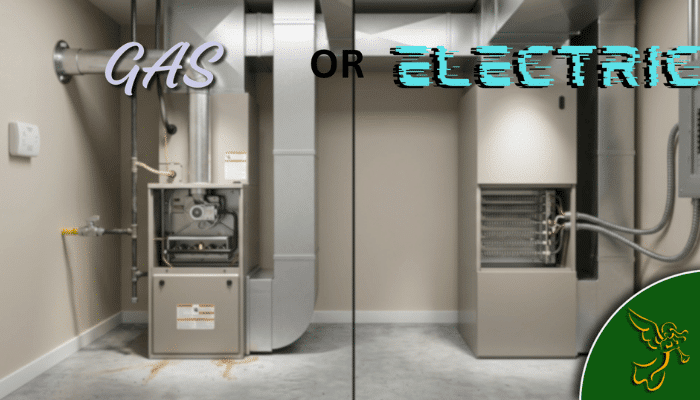
When homeowners are choosing a furnace, gas versus electric is one of the first forks in the road. Both heat a home well when properly installed, but they work differently, cost differently to run, and fit different situations. Here's the honest breakdown.
How Each One Works
A gas furnace burns natural gas or propane in a combustion chamber, and a heat exchanger transfers that heat into the air blown through your ducts. It needs a gas supply line and a venting system to safely carry exhaust outside.
An electric furnace uses heating elements — essentially large, controlled resistance heaters — to warm the air with no combustion and no venting required.
| Feature | Gas Furnace | Electric Furnace |
|---|---|---|
| Heat output | Strong, fast heat | Steady, but generally slower to recover |
| Operating cost | Usually lower where gas rates are favorable | Usually higher, tied to electric rates |
| Installation | Requires gas line and venting | Simpler install, no gas line needed |
| Maintenance | Combustion components need annual inspection | Fewer moving parts, generally simpler |
| Safety consideration | Requires CO safety awareness | No combustion byproducts |
| Best for | Homes with existing gas service, cold-snap performance | Homes without gas access, simpler installs |
The Honest Take
If you already have natural gas service, a gas furnace is usually the more economical choice to run over the long haul, and it delivers strong heat even on our rare frigid nights. If gas isn't available or you'd rather avoid combustion and venting altogether, electric is a perfectly solid, lower-maintenance option — it just tends to cost more on the monthly bill.
There's no universally "better" choice here — it comes down to what's available at your home and what you value most. We'll walk your specific situation with you and lay out real numbers for both before you decide.
If you're weighing a furnace replacement, call Perfect Service at 205-206-6091 . We'll help you figure out which option actually makes sense for your house.
Common Questions About Gas and Electric Furnaces
In most cases, gas costs less to operate where gas service is already available, though local utility rates affect the exact math. We can run the comparison for your specific home.
Electric furnaces don't produce combustion byproducts, so there's no carbon monoxide risk to manage. A properly maintained and inspected gas furnace is also safe, but it does require that ongoing attention.
Yes, though switching to gas requires bringing in a gas line if you don't already have one, which adds cost. We can assess what a conversion would involve for your home.
Both types can offer many years of reliable service with proper maintenance. Electric furnaces have fewer components that can fail, while gas furnaces need that annual combustion safety check to stay in top shape.
Yes, though gas is often felt to produce a more immediate, intense heat. For Alabama's relatively mild winters, both types comfortably keep up with typical demand.