

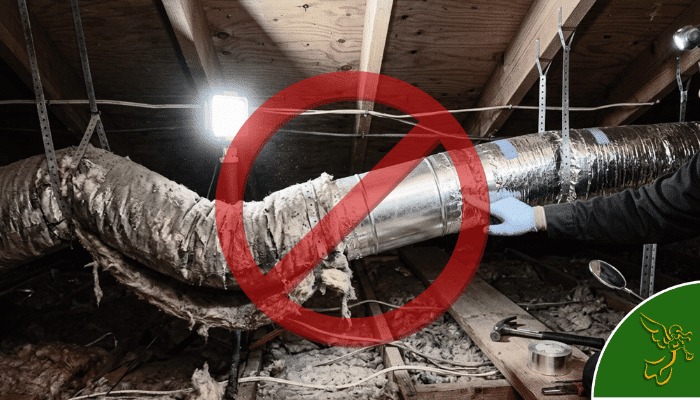
Ductwork is the part of your comfort system nobody thinks about — it's hidden in attics and crawlspaces, quietly carrying your heated and cooled air to every room. But ducts don't last forever, and when yours are aging or damaged, you'll eventually face a decision: patch what you've got, or replace it? We get this question a lot, and the honest answer depends entirely on what's actually going on up there.
When Repairing Makes Sense
If your duct system is fundamentally sound and well-designed, repairs are often the smart, cost-effective move. Good candidates for repair include:
- Sealable leaks at connections and joints. These are common and very fixable with proper sealing.
- A few damaged or disconnected sections. If most of the system is fine and only a spot or two has come apart or been crushed, targeted repairs restore it.
- Missing or degraded insulation on ducts running through hot attics or damp crawlspaces, which can be added or replaced.
In these cases, you're improving a system that's basically working — sealing the leaks, reconnecting what's loose, and getting your comfort and efficiency back without tearing everything out.
When Replacement Is the Better Call
Sometimes patching just delays the inevitable and wastes money. We lean toward full replacement when we find:
- Very old or deteriorating ductwork. Older duct materials break down over time, and once that starts, sealing and patching can't keep up.
- Widespread leaks or crushed, kinked runs. When the problems are everywhere instead of in one spot, repairs stop being economical.
- Mold or contamination inside the ducts. If the ducts themselves are harboring mold, replacing the affected sections is often the honest, healthier fix.
- Poor design or undersizing. If the system was never sized or laid out correctly — long, tortured runs, not enough returns, ducts too small for the equipment — no amount of sealing fixes a fundamental design flaw. Replacing it right solves the root problem.
- A duct system that's being asked to serve an addition it was never built for.
Repair or Replace: A Quick Guide
| Repair Usually Makes Sense If… | Replacement Usually Makes Sense If… |
|---|---|
| The system is well-designed and mostly sound | The ducts are very old or made of deteriorating material |
| Leaks are at connections and can be sealed | Leaks and damage are widespread |
| Only a section or two is damaged | Runs are crushed, kinked, or falling apart throughout |
| Insulation just needs adding or replacing | There's mold or contamination inside the ducts |
| The ducts are properly sized for your home | The system is undersized or poorly designed |
The Honest Bottom Line
Not every aging duct system needs to be ripped out — and we'll tell you plainly when a good sealing and a few repairs will get you where you need to be. But when ducts are failing in several ways at once, or the design itself is the problem, pouring money into patches just kicks the can down the road. Replacing them right restores your comfort, cuts down on wasted energy, and stops the recurring "why is this room never comfortable" frustration for good.
The only way to make this call correctly is to actually inspect the system and see what you're working with. Call Perfect Service at 205-206-6091 , and we'll evaluate your ductwork, show you what we find, and give you a straight recommendation — repair or replace — based on what's genuinely best for your home and budget.
Common Questions About Old Ductwork
It varies with the material and installation, but ducts generally last a good number of years before age catches up with them. Older systems and deteriorating materials are the ones most likely to need replacement rather than repair.
If the leaks are the main issue and the system is otherwise sound, yes — sealing is a great, cost-effective fix. It’s when the problems are widespread, or the design is flawed, that sealing alone stops being enough.
It can. Ducts running through dusty attics or damp crawlspaces can pull in debris and, in bad cases, harbor mold — which then circulates through your home. That’s one reason contaminated ducts often warrant replacement.
Often, yes — especially if the old system was leaking heavily or poorly designed. Getting the air where it’s supposed to go, without losses, means your system works less to keep you comfortable.
A professional inspection is the only reliable way. The right answer depends on the age, material, condition, and design of your specific ducts, which is exactly what an evaluation is meant to determine.